







The Difficult Airway Course: EMS™
A specialised difficult airway training course designed for healthcare professionals on how to manage patients with challenging airways.


 Course duration
2 days
Course duration
2 days
 Awarding body
The Difficult Airway Course
Awarding body
The Difficult Airway Course
Book now
The Difficult Airway Course
The Difficult Airway Course is designed to equip healthcare professionals with the skills needed to manage challenging airway situations, particularly when intubation or ventilation becomes difficult — scenarios that can result in serious complications or life-threatening emergencies. Airway management is a critical skill in anaesthesia, emergency medicine, critical care, and surgery, and this course prepares providers to act confidently when conventional techniques may not be sufficient or safe. Key topics include understanding airway anatomy and physiology, assessing patients for potential risks, and learning to use a range of airway management tools and techniques such as laryngoscopes, video laryngoscopy, and supraglottic devices. The course also stresses the importance of teamwork, communication, and coordination in emergency situations.
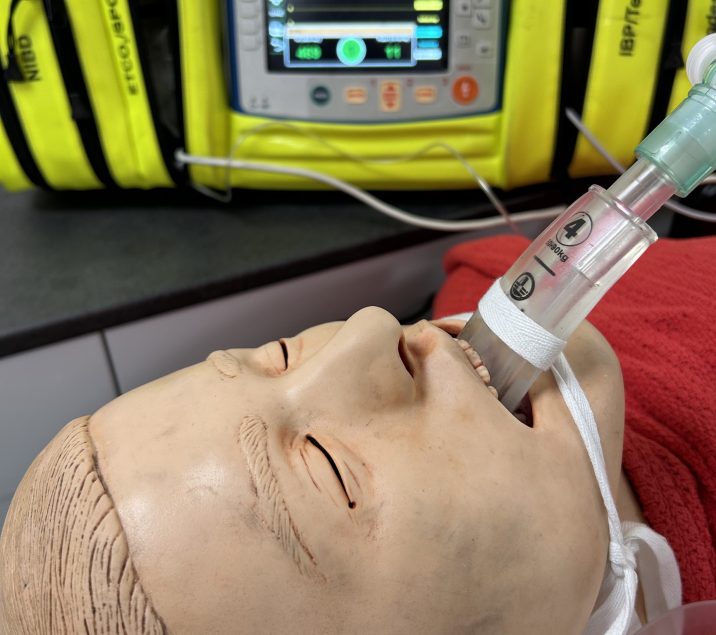
This 16-hour course includes small group sessions on proven airway devices, practical training on a full range of techniques, and expert-led instruction focused on real-world challenges faced by healthcare professionals. Participants practise decision-making and airway techniques through Code Airway™ simulations in a safe, controlled environment, tackling complex scenarios such as elevated intracranial pressure, pulmonary oedema, cardiogenic shock, status asthmaticus, airway trauma, and multiple trauma with shock. The course is particularly suited to intubating paramedics looking to progress into critical care roles.
The Difficult Airway Course
The course covers a wide range of advanced airway management skills, including predicting the difficult airway and understanding human factors/CRM in emergency situations. Participants will develop essential techniques such as effective bag–mask ventilation, endotracheal intubation, video laryngoscopy, and the use of other advanced imaging devices. The programme also includes medication-assisted intubation (including RSI and RSA), paediatric airway skills, and the SALAD technique for airway decontamination. Hands-on simulation features prominently throughout, along with practical training in emergency surgical airways (FONA) using tissue trainers. Learners will also become familiar with a wide range of extraglottic devices.